How a Cartoning Machine Saves Time and Money in Production

In modern manufacturing, time and money are the two resources businesses can never afford to waste. Every minute of downtime, every packaging error, and every slow production shift directly impacts your bottom line. For companies that rely on secondary packaging, a cartoning machine is one of the most powerful tools available to tackle both challenges simultaneously.
This article breaks down exactly how a cartoning machine saves your business time and money and why it’s one of the smartest investments a production facility can make.
What Does a Cartoning Machine Actually Do?
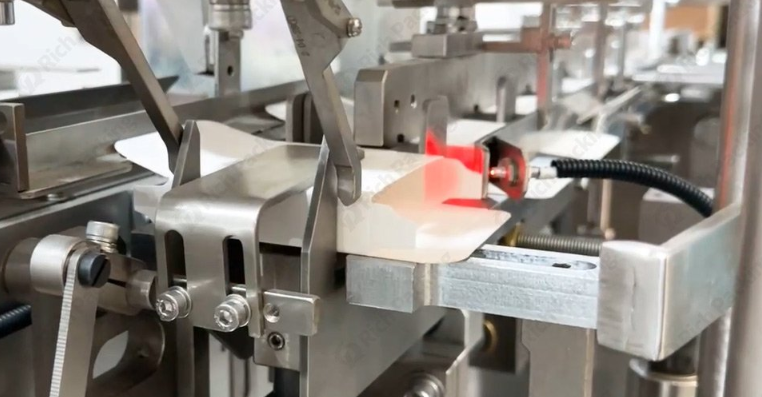
A cartoning machine automates the process of forming flat carton blanks into boxes, filling them with products, and sealing them all in a single continuous operation. What once required a team of workers folding, inserting, and closing boxes by hand now happens automatically at speeds that manual labor simply cannot match.
See also: Ensuring Reliability and Trust in Modern Tech
Saving Time: Speed That Transforms Production
Dramatically Higher Output Per Hour
The most immediate time-saving benefit of a cartoning machine is raw speed. A standard automated cartoner can produce between 100 and 500 cartons per minute, depending on the model and product type. Compare that to a manual worker who might complete 10 to 15 cartons per minute on a good day. The math is striking one machine can outperform an entire team while running continuously for hours without fatigue or breaks.
Faster Changeovers Between Products
Modern cartoning machines are built for flexibility. With pre-programmed format settings and quick-change mechanical parts, operators can switch the machine from one product size or carton type to another in as little as 20 to 30 minutes. In a manual environment, retooling and retraining workers for a new product format can take hours or even an entire shift.
Elimination of Bottlenecks
In production lines where packaging is done manually, the packaging station is often the slowest point the bottleneck that holds back the entire operation. A cartoning machine matches or exceeds the pace of upstream filling and processing equipment, ensuring a smooth, uninterrupted production flow from start to finish.
24/7 Operational Capability
Machines don’t need rest. A cartoning machine can operate across multiple shifts, running through the night if needed, without performance degradation. During peak seasons or large order fulfillment periods, this around-the-clock capability is invaluable and eliminates the cost of overtime pay for workers.
Saving Money: Where the Real ROI Lives
Reduced Labor Costs
Labor is typically one of the largest costs in any production facility. Manual packaging lines require multiple workers per shift and that’s before accounting for supervisors, training time, employee benefits, and turnover. A single cartoning machine can replace several workers on the packaging line, dramatically reducing your per-unit labor cost without sacrificing output.
Minimized Material Waste
Manual packaging often results in damaged or incorrectly folded cartons that must be discarded. Automated machines apply precise, programmed movements every time, using carton blanks efficiently and reducing material waste to a fraction of what a manual line produces. Over thousands of production cycles, the savings on raw materials add up quickly.
Fewer Errors and Less Rework
Packaging mistakes are expensive. Mislabeled boxes, improperly sealed cartons, or incorrectly inserted products require rework, reprinting, and sometimes product recalls. A cartoning machine performs the same action identically on every cycle, virtually eliminating human error and the costly downstream consequences that come with it.
Lower Long-Term Maintenance Costs
Modern cartoning machines are engineered for durability and easy maintenance. With predictive maintenance features built into smart HMI systems, potential issues are flagged before they cause breakdowns. Planned maintenance is far less costly than emergency repairs or unscheduled production stoppages.
Fast Return on Investment
Most businesses that invest in a cartoning machine recoup their initial cost within one to three years through labor savings, waste reduction, and increased throughput. After that payback period, every carton the machine produces represents pure profit improvement compared to the previous manual process.
Conclusion
A cartoning machine delivers measurable, lasting value by attacking two of your biggest production challenges at once. It accelerates your output to levels manual labor cannot reach, while systematically cutting the hidden costs that erode your margins every single day.
For any business serious about scaling efficiently, protecting product quality, and staying competitive in a demanding market, investing in a cartoning machine is not a luxury — it is a necessity.